
Finding Easley Residents Carefully
There is no official master list of Easley residents. A property record answers who owns or receives tax mail for a parcel. A deed records parties to a land transaction. A voter record has its own public-access rules. A city directory or census can place a household at an earlier time. Start by deciding which of those facts is needed, because a match in one source does not turn into every other fact about that person. Easley also reaches the county line, so a postal address should be checked against the parcel and county before treating a record as a Pickens County record.
Use a name when the goal is to separate same-named people through court, deed, or historical material. Use a full street address for a parcel and its ownership chain. For an older household, note the date first and move to the library, SCDAH, or the applicable county custodian when a current portal has no relevant period. The sequence below keeps the evidence distinct and leaves a clear path when the first screen is not enough.
- Check the Pickens property route with the street address, owner name, parcel number, or account number.
- Record the situs address and parcel details, then distinguish them from any mailing address.
- Use the Register of Deeds index for named parties and the instrument trail, not as an address roster.
- For a dated household question, ask the Pickens County Library System Historical Collection about directories, newspapers, census material, or maps.
- Request an existing city or county record by address, document number, and date range when the public screen does not reach it.
Note: Ownership, registration, and a historical listing are separate evidence, so corroboration matters before relying on an Easley result.
Easley Records Office Map
Easley is not the Pickens County seat, so land, circuit and family court, and several county record routes lead to Pickens rather than City Hall. The Register of Deeds holds recorded land instruments. The Assessor and GIS establish the parcel framework. The County Clerk is the filing and copy channel for court records, while the state Public Index is the first online screen. The city supplies useful municipal layers such as permits, planning files, police-report requests, and municipal-court contacts, but those records do not replace county ownership or state vital records.
Pickens County Register of Deeds
222 McDaniel Ave., Suite B5
Pickens, SC 29671
(864) 898-5865
Pickens County Assessor
Current property and parcel route
Pickens County, SC
Confirm counter details before travel
Pickens Elections and State Lookup
County registration and election route
Pickens County, SC
Use the county board for record requests
Pickens County elections records route
For a city-held administrative record, use the city department or a focused South Carolina FOIA request. For a certified court or recorded-land copy, contact the actual custodian. The Easley street directory keeps the address-led property chain separate from the broader residents directory workflow.
Easley Property and Deed Trails
The property route is the strongest current starting point when an Easley street address is known. The Pickens Assessor advertises alternatives for owner name, property address, parcel number, and account number. Its related GIS layer separates owner or mailing fields from situs fields, which identify the physical parcel. That difference matters. A tax-mailing address may belong to an agent, a business, or a post office box, while the situs address identifies the land being assessed. Neither one is a list of everyone at the location.
The county entry point captured for the property route is available through the Pickens County website.
Use the live Assessor service to confirm the current search screen before depending on a particular field label. From a parcel, preserve the legal description or tax-map reference before turning to the Register of Deeds. AcclaimWeb is the ROD's recorded-document index. It states an online public range of 1971 to the present, although not every record in that period is online, and says scanned deed images begin in December 1986. A counter call remains the fallback for an earlier book, image, plat, or certified copy.
Easley Court Names Need Context
A court result can help distinguish people with the same name, but it is not proof of residence or a complete personal history. The South Carolina Trial Court Public Index can be limited to Pickens County and searched by case number, name, action type, date type and range, or tax map number. Its guide also describes court type, court agency, case type and subtype, party role, and judgment or lis pendens filters. Compare the court agency, dates, party role, and a separate record before tying a result to an Easley person.
The SLED CATCH request screen is a separate, fee-based South Carolina criminal-record channel, rather than a residents directory.
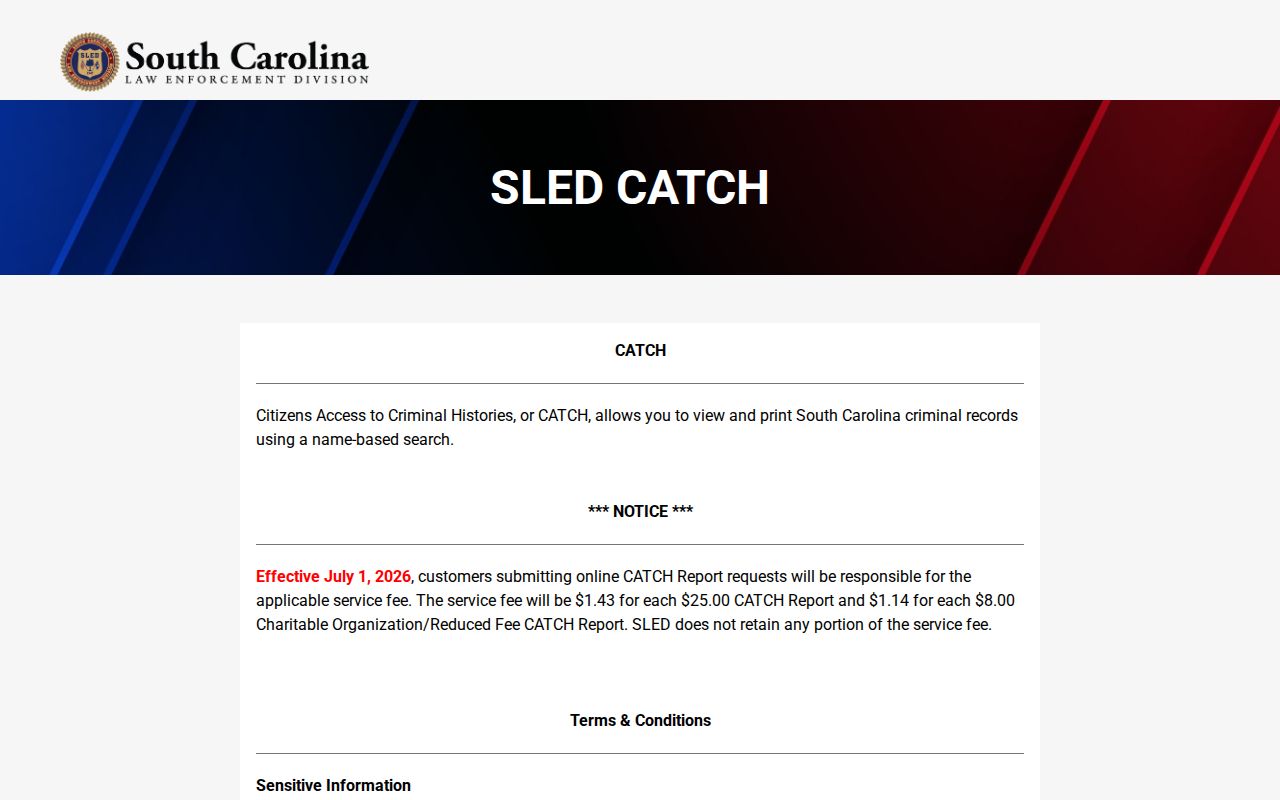
Its name-based process can be affected by aliases and date-of-birth differences. The Public Index and SLED serve different purposes, and neither replaces the Clerk or Easley Municipal Court counter when a filed copy, certification, or explanation of a result is needed. Sealed, juvenile, expunged, and protected material must not be treated as publicly available.
Current Easley Resident Sources
Current Easley resident evidence is scattered by purpose. A parcel record supports an ownership or land-location question. Registration records are available under South Carolina law but carry protections and request limits. Deed records document parties to land transactions. Court entries document a case event, not a home address. A state or local business record can identify an entity or registered agent, but it does not establish where an individual lives. Read each one for the limited fact it actually reports.
| Source | Who It Lists | Keeper | Access |
|---|---|---|---|
| Property roll and GIS | Owners, parcel and situs context | Pickens County | Assessor/GIS route and counter |
| Registration records | Registered-voter information subject to law | State and county elections offices | Lookup or inspection/request channel |
| Recorded instruments | Grantors, grantees, land descriptions | Pickens Register of Deeds | AcclaimWeb, counter, copies |
| Trial Court Public Index | Parties and public case entries | South Carolina Judicial Branch | County-limited web index, clerk follow-up |
| Chamber member search | Participating organizations and businesses | Greater Easley Chamber | Public member directory |
The South Carolina voter-information route is an official starting point for a voter’s own information, not an open street roster.
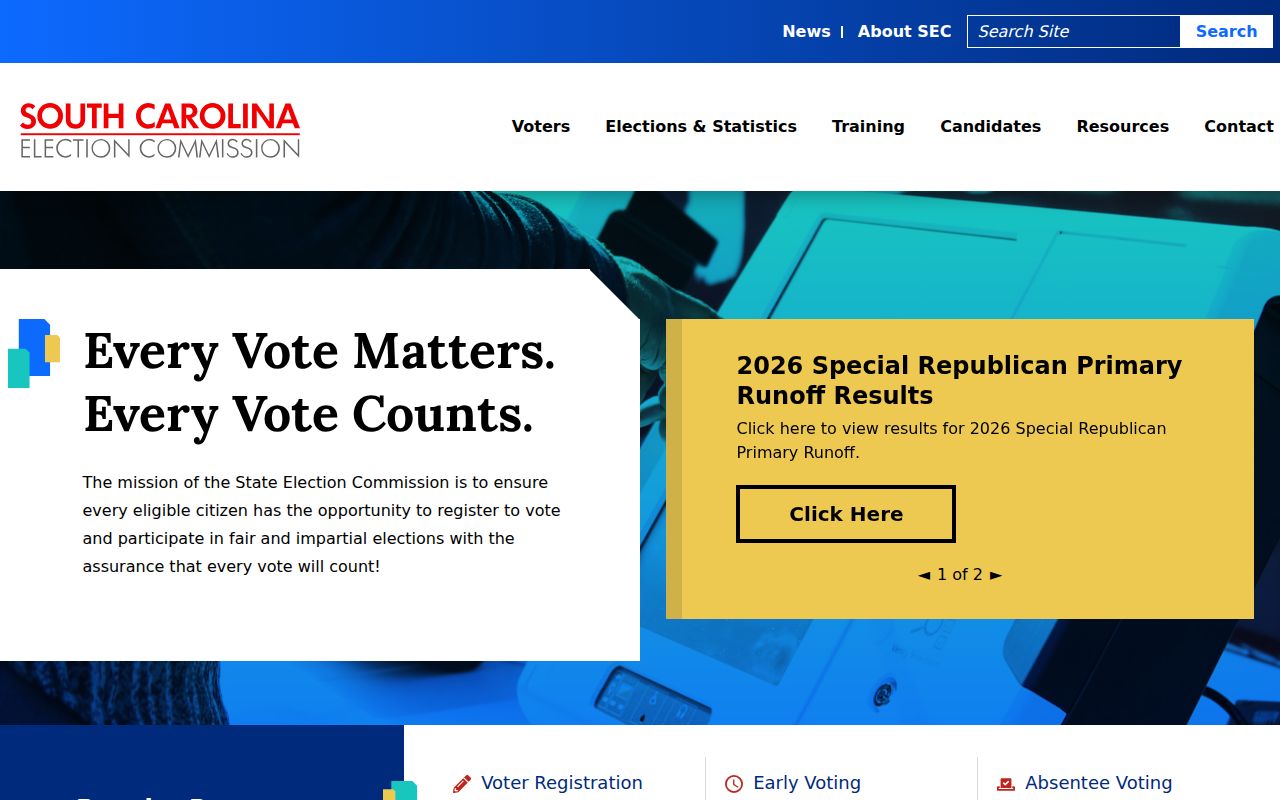
For a one-person question, compare the precise source types rather than stacking unsupported assumptions. A resident lookup requires name-to-record confirmation rather than a broad result list. Note: A public record can point to a further inquiry, but the keeper decides access to a certified or restricted record.
Easley City Document Routes
City records are an address-linked layer, not a replacement for Pickens County land and court custody. The Easley City File Directory searches documents by keyword, entity, and file type. Its entity choices include Building Department, Code Enforcement, FOIA, Municipal Court, Planning and Development, Police Department, and Zoning. Results identify date, title, type, and entity. That makes it useful for locating a permit report, planning packet, map, or policy before asking the responsible office for the underlying existing record.
City material can also require a narrow written FOIA request. Identify the street address, permit or case number, and date window. Ask for existing records in electronic form and request an estimate before any charge. The city packet describes a possible advance deposit of up to 25 percent and uses the state timing framework, but a request cannot require staff to create a resident list or release exempt private data. Older agendas and minutes may be in Archives rather than the active display.
Easley Vital Record Gates
South Carolina vital records need a date and an eligibility check before a search begins. Birth records are closed for 100 years and death records become public after 50 years. DPH issues certificates within its stated programs, while the issuing probate court holds marriage-license records outside DPH's stated July 1950 through December 2023 marriage window. The Pickens Clerk is the local divorce-decree custodian. Historic family work often belongs with the state archives, library microfilm, county probate, or the appropriate DPH index rather than an attempt to obtain a current certificate.
The DPH marriage certificate instructions show the state route and its eligibility conditions.
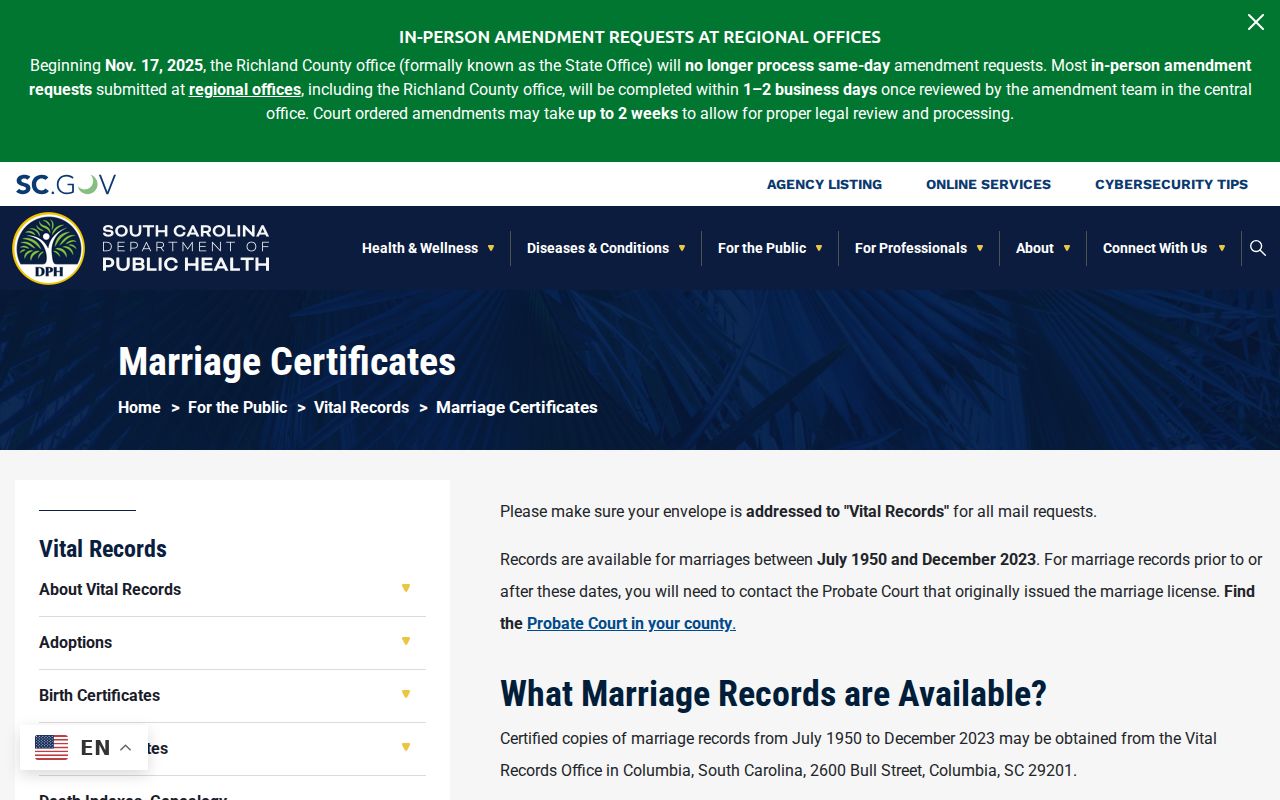
A marriage certificate request is not a general way to locate a current resident. For a death record, DPH provides separate channels and restrictions through its death certificate service.
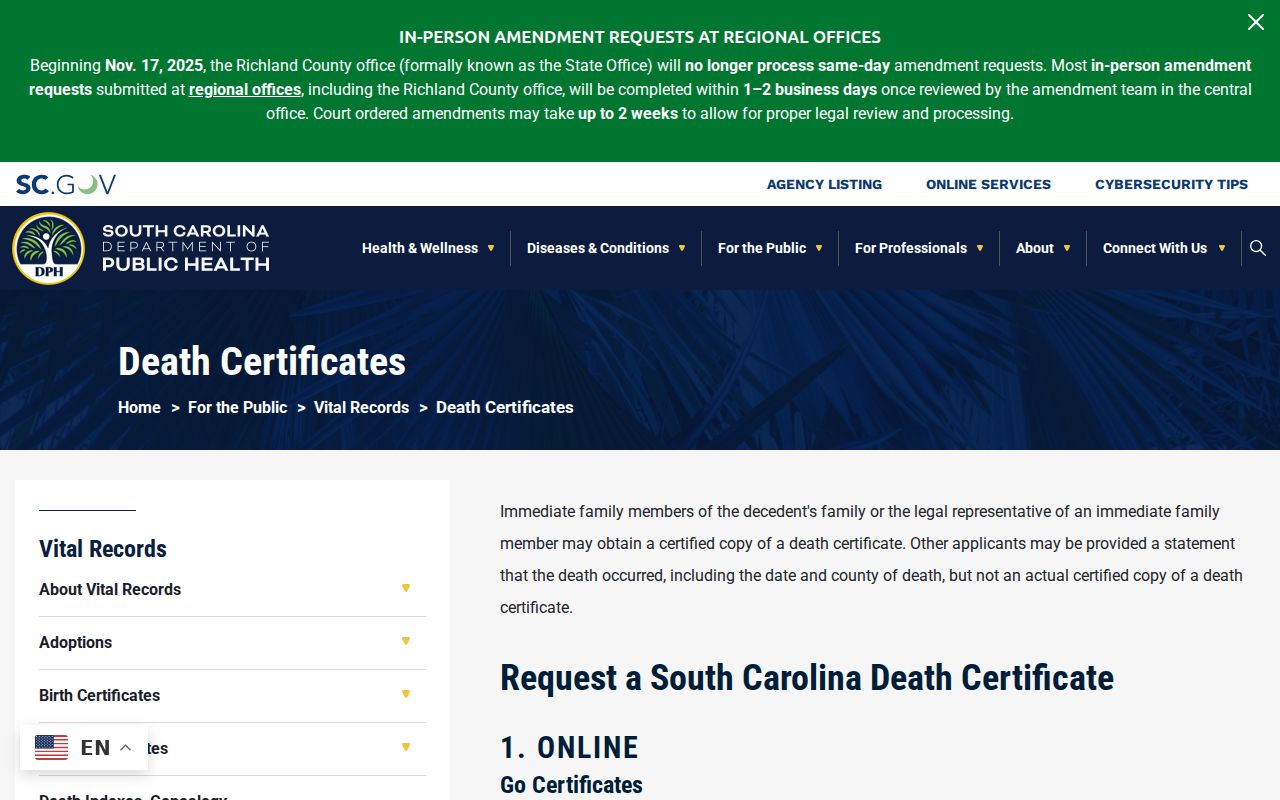
Older research can use SCDAH's published 100-year birth and 50-year death genealogy thresholds. Ask the issuing office about any record outside a stated state coverage window rather than assuming it is unavailable.
Easley Search Fields Matter
The right field limits false matches. Pickens ROD AcclaimWeb supports name, book and page, document type, description, consideration, TMS, and record-date modes. The Trial Court Public Index offers a county filter and records-related terms such as party name, action type, date range, court agency, and tax map number. Each field describes an index route, not proof that a result belongs to the person sought. Spelling variants, former names, and partial names should be checked with a date, county, parcel, or another independent detail.
| Official route | Useful documented fields | Best confirmation |
|---|---|---|
| Pickens ROD AcclaimWeb | Name, book/page, document type, TMS, record date | Instrument image or ROD copy procedure |
| Trial Court Public Index | Name, case number, action type, dates, tax map number | Court agency, party role, clerk record |
| City File Directory | Keyword, entity, file type | Document title, date, responsible department |
- Roll
- A list maintained for a particular administrative purpose, not a universal household list.
- Index
- A finding tool that points to a record; the indexed result and the underlying document can differ.
- Parcel
- A defined unit of land used in assessment and mapping, often linked to a tax-map identifier.
- Criss-cross directory
- A historical directory arranged by address, useful only for the years and places it covers.
Easley Official Searches Have Limits
Official tools should be used for their stated subjects. The Secretary of State's business system searches entities on file, registered agents, and public filings. It does not include every local business, and the state warns that it does not hold names and addresses for a company's officers or directors. Similarly, the state registry and criminal-record systems have public-safety or records functions, not a role as an all-purpose residents directory. A precise name, office, and record purpose keep each search grounded.
The South Carolina Business Entities Online screen is the state source for entity and filing research.
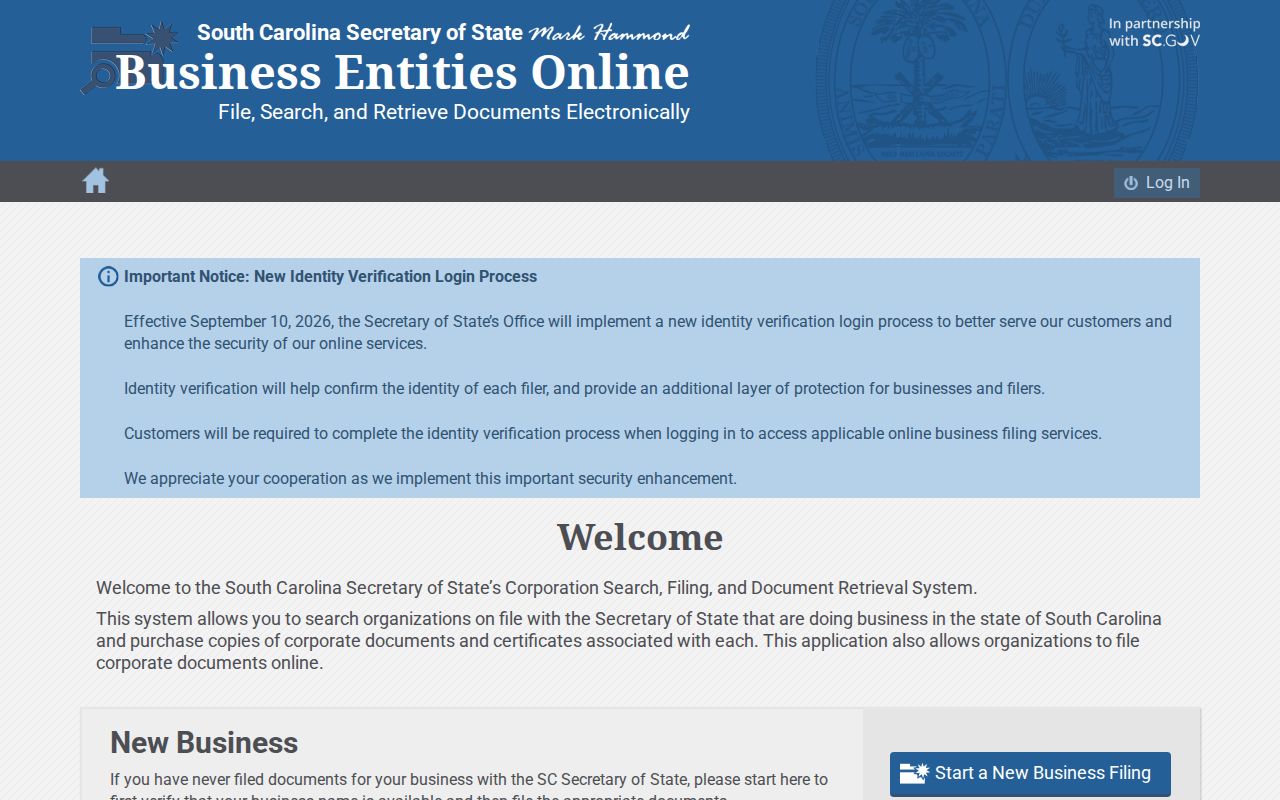
A filing address or registered agent can be a business contact, not an individual's home. The SLED State Sex Offender Registry is likewise a limited public-safety registry with its own correction process.
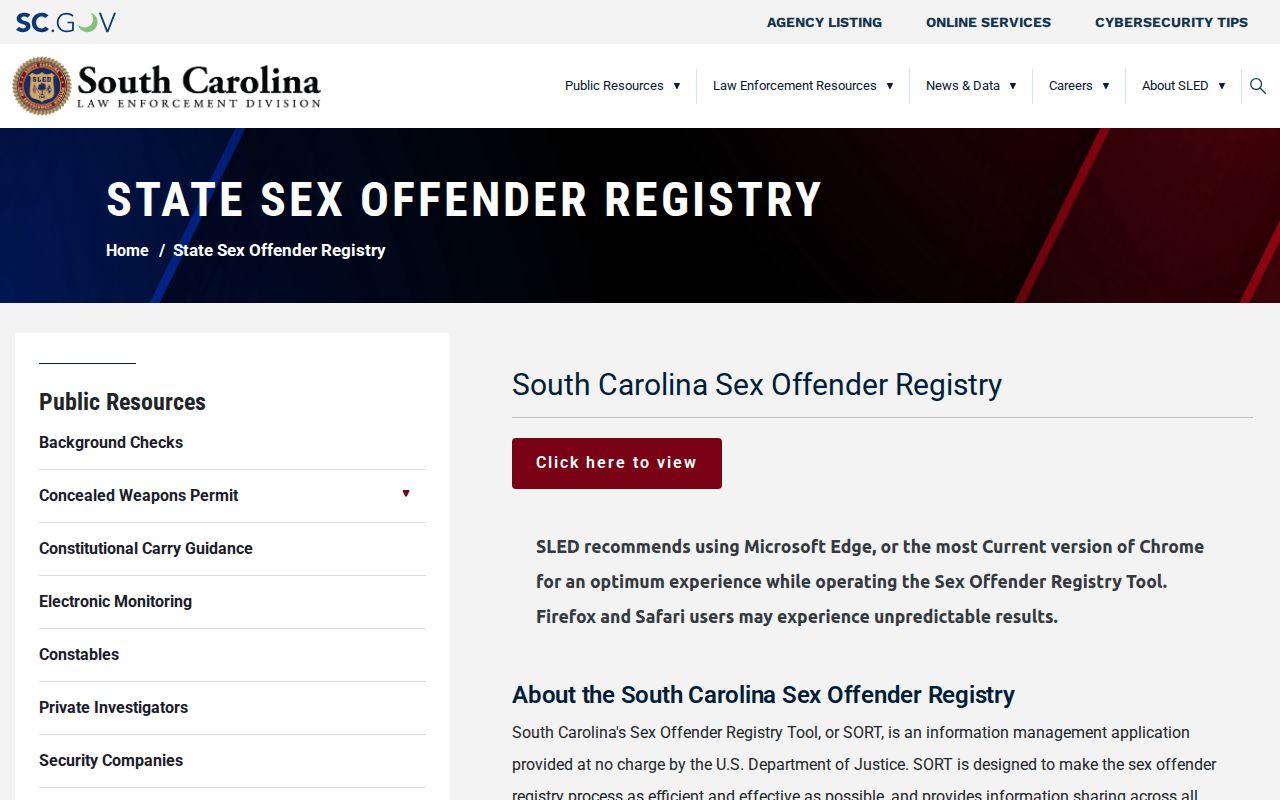
Do not turn a name match from either system into a residence conclusion. Contact the listed official custodian for a correction or question about the record's stated scope.
Historic Easley Directory Sources
Historical work starts with a period, then a custodian. The Pickens County Library System Historical Collection in Easley holds non-circulating material and can provide limited obituary lookup and a Book a Historian appointment. Its digital collections include Easley High School yearbooks from as early as 1925, People and Places material, newspaper images, and a digitized 1916 Easley census. PCLS also reports early Easley Messenger material, Easley Progress runs in the early 1900s and 1921 to 2016, and other Pickens-area titles. A newspaper notice or directory entry is a dated lead, not automatic proof of legal residence.
The South Carolina Department of Archives and History genealogy resources add catalogs, indexes, and a research room to the local shelf.
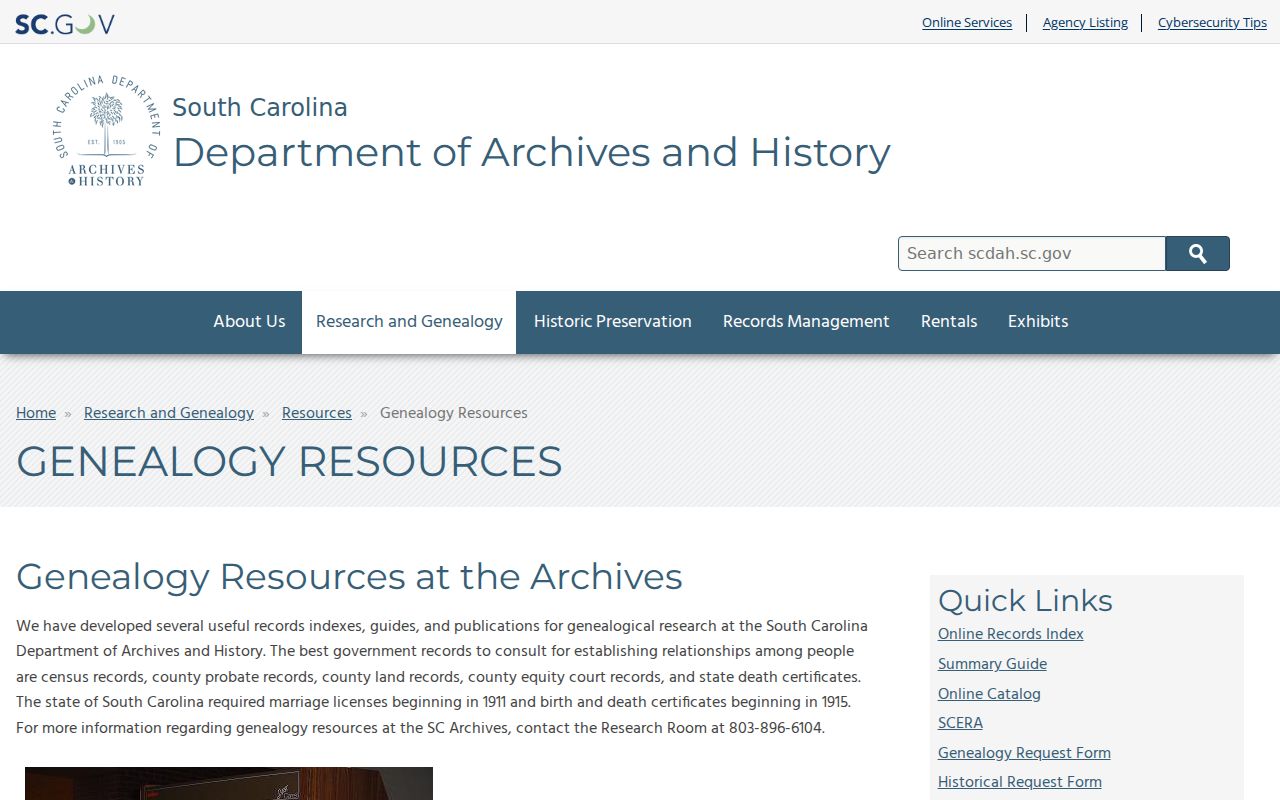
Older Easley-area work may need the historical jurisdiction terms Pendleton District, Pickens District, Anderson, Pickens, or Oconee. PCLS specifically advises expanding those terms when a pre-1868 search is empty. The complete handling of directory entries, local collections, and dated household tracing belongs on the Easley city directory page.
Easley 1916 Census Snapshot
Easley's digitized November 1, 1916 local census is an unusually useful time-stamped source. It reports 3,744 people and 75 business houses and describes three large cotton mills, an oil mill and fertilizer manufacturer, banks, schools, electric power, and a water plant. Those details are historical context from the document itself, not a substitute for a federal census or a present-day roster. Its terminology and categories should remain understood as products of that time.
Easley incorporated in 1873 after the Atlanta and Charlotte Air Line Railroad reached the area, and downtown formed around the Pendleton/Main depot. Cotton mills opened in 1900 and 1902. That railroad-to-mill history helps explain why an older address trail can cross local directories, newspapers, plats, deeds, and map sources. It also cautions against expecting a modern city screen to hold every old resident reference.
Easley Library and Counter Fallbacks
When an online index stops, change channels rather than filling a gap with guesswork. Call the Register of Deeds for a pre-online book, microfilm, image, or copy procedure. Ask the Clerk for filed court material that does not appear online. Contact Pickens Probate for local marriage-license or estate questions outside documented state coverage. For county or city administrative material, make a focused FOIA request that names an existing record, address, date range, and preferred format. SCDAH and PCLS are the historic fallback for material that predates modern local systems.
South Carolina FOIA, S.C. Code Ann. Title 30, Chapter 4, permits inspection, copying, and electronic transmission of existing non-exempt public records. It does not obligate an office to create a new list, decide whether someone lives at an address, or disclose confidential material. The City File Directory's archive note is particularly useful for old agendas or minutes: request archived retrieval through the city clerk or FOIA channel instead of assuming an absent web result means the record no longer exists.
Easley Privacy and Redaction Limits
South Carolina access law has firm boundaries. The Address Confidentiality Program under S.C. Code §16-25-130 protects qualifying participants' information, and its application materials are not public records. Separate restrictions apply to sealed, expunged, juvenile, adoption, recent vital, protected voter, and motor-vehicle data. S.C. Code §30-2-330 also gives eligible people a way to seek removal of specified identifiers from public images displayed online by a register of deeds or clerk. That redaction route does not erase a lawful land or court record.
Verify a fact with the office that holds it, especially when a record could be old, incomplete, or affected by a confidentiality rule. Respecting those limits keeps an Easley residents directory useful without turning a public record into an unsupported claim about someone's life.